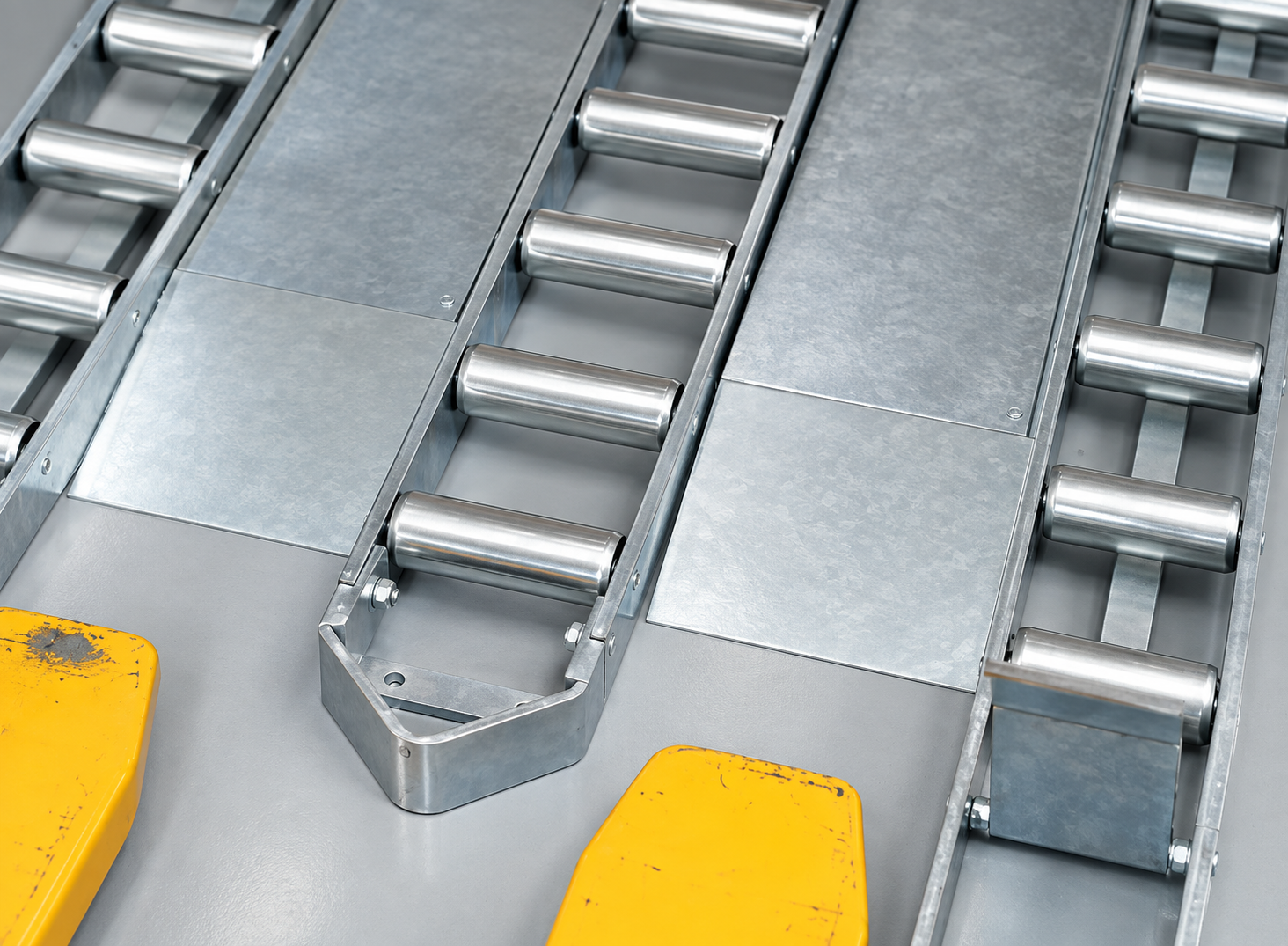
Components
The roller conveyors consist of standard components that are generally used in every conveyor system, as well as accessories that are either configured differently depending on the application – for example, a two- or three-part removal section – or added as required, such as roller protection profiles or infeed centring guides.
Profile 750
The Sendzimir-galvanised perforated profiles can be used with either inserted or bolted conveyor rollers. For bolted rollers, the profile is simply turned over.
Bolted rollers are used, for example, when the required roller pitch does not allow the use of brake rollers or when particularly high stability requirements must be met.
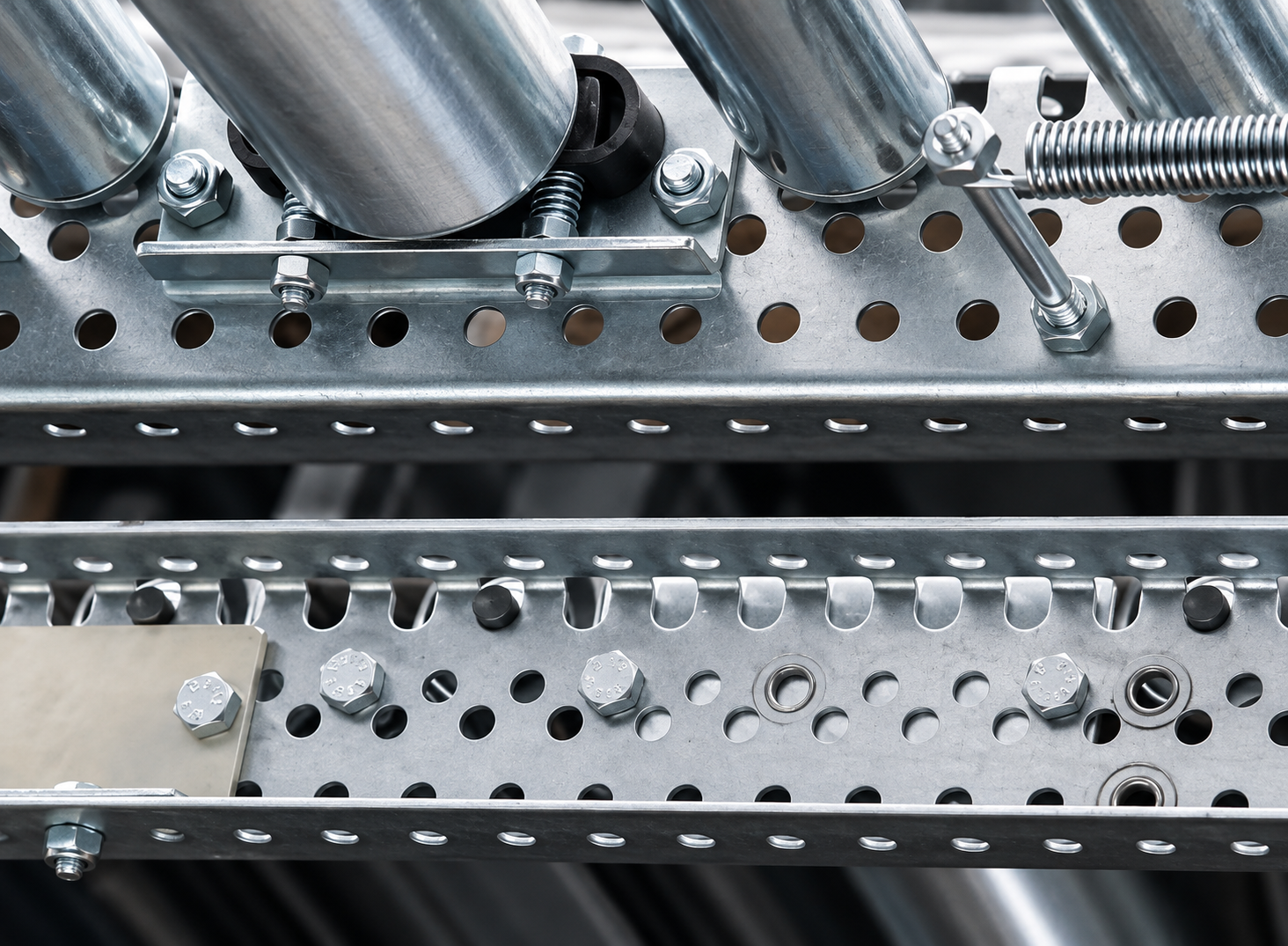
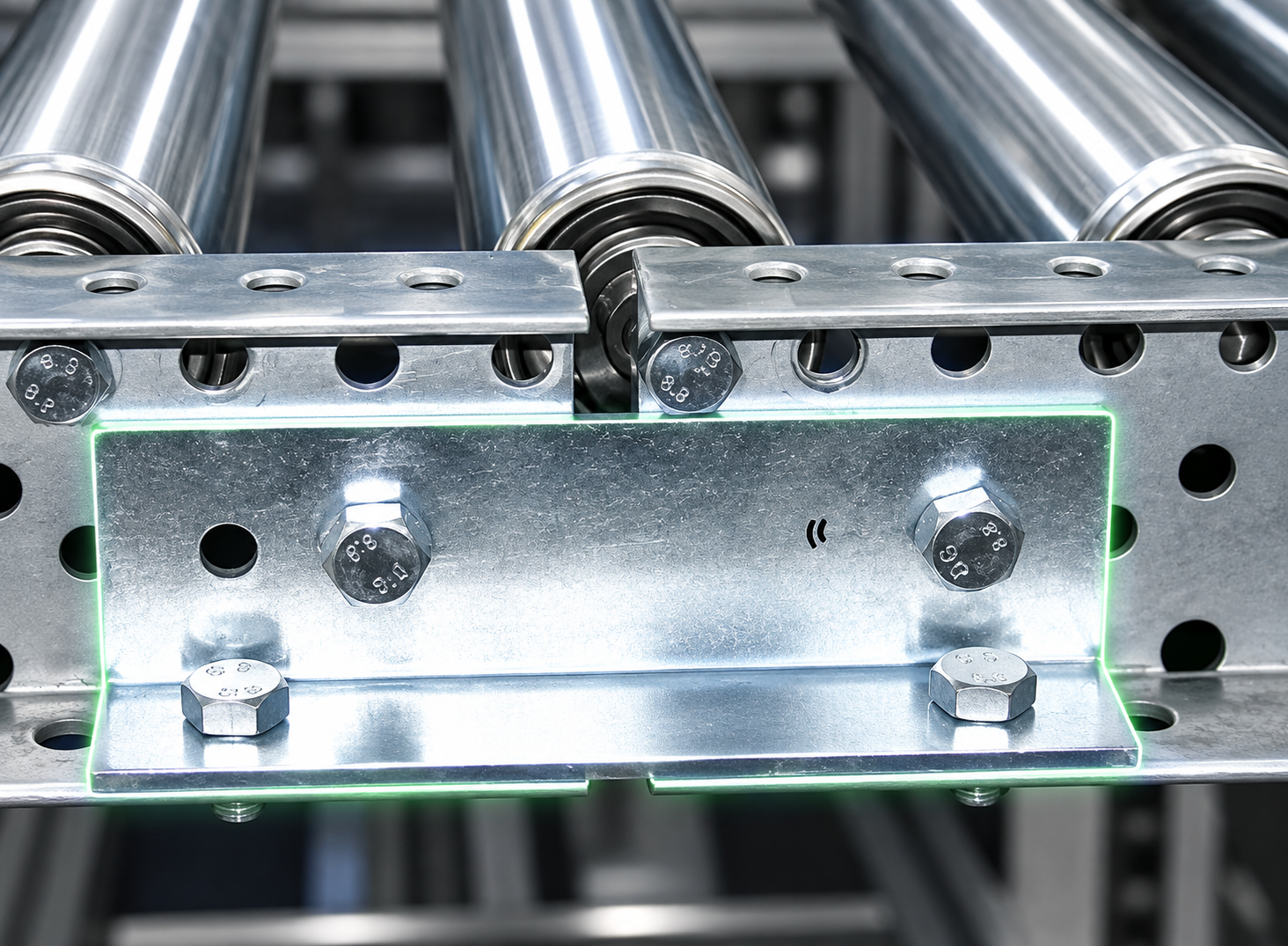
Connector
Rollex roller conveyors can be supplied in pre-assembled modules, for example to minimise transport costs. Using the connectors, conveyor sections of any required length can be assembled.
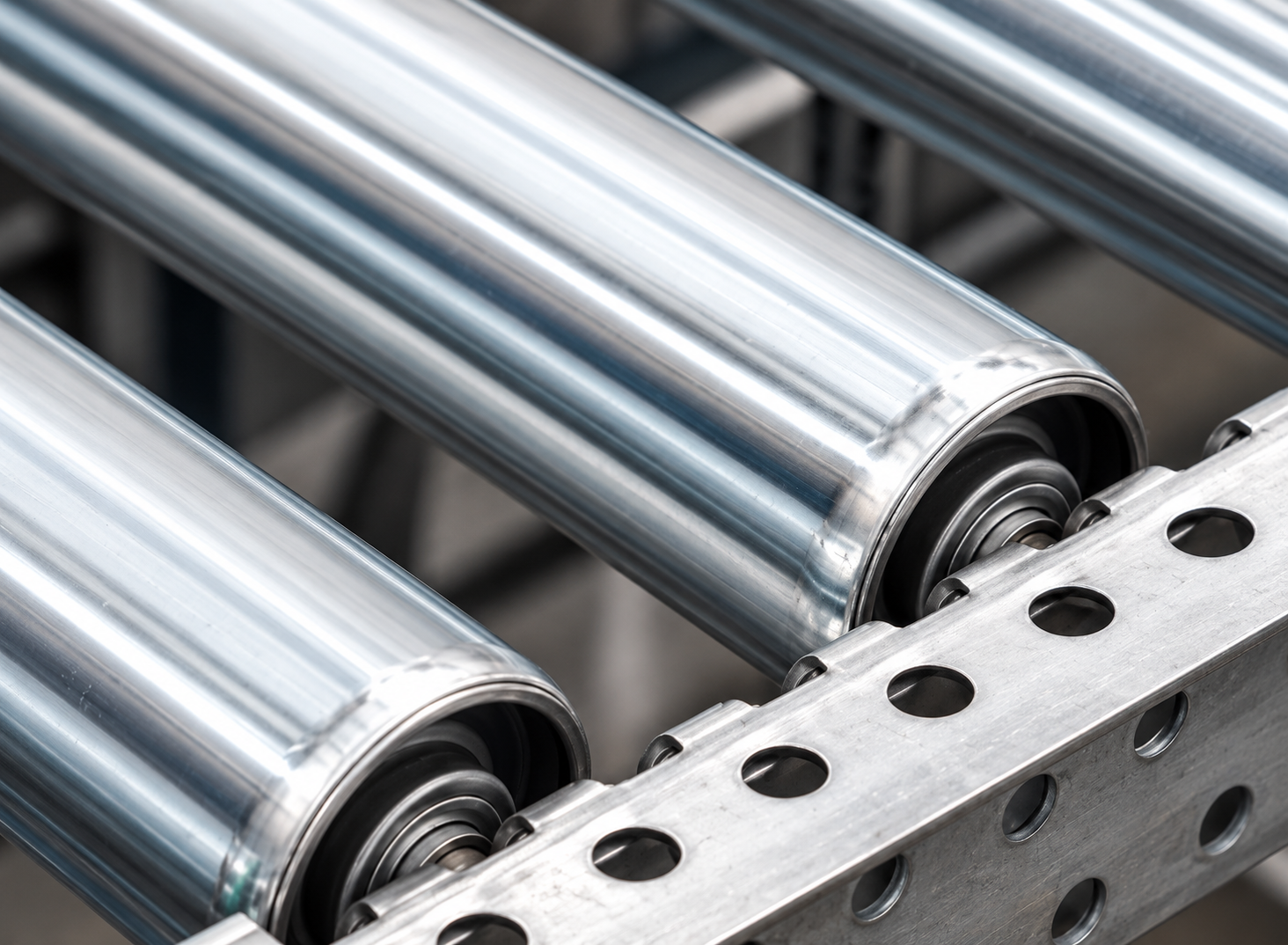
Support rollers
Galvanised STI or bare steel ST tubing is used as the roller material as standard. The shaft design is usually either A12 smooth for inserted rollers or A 14 IGM 10 in the case of bolted shafts. In addition to the standard clamping lengths of 872, 1072 and 1272, custom lengths can also be supplied.
End stop
The end stop profile, which is usually galvanised or powder-coated, serves as an end stop for the goods being conveyed at the end of the roller conveyor. Depending on the type of pallet, the stop surface can also be selected to be wider.
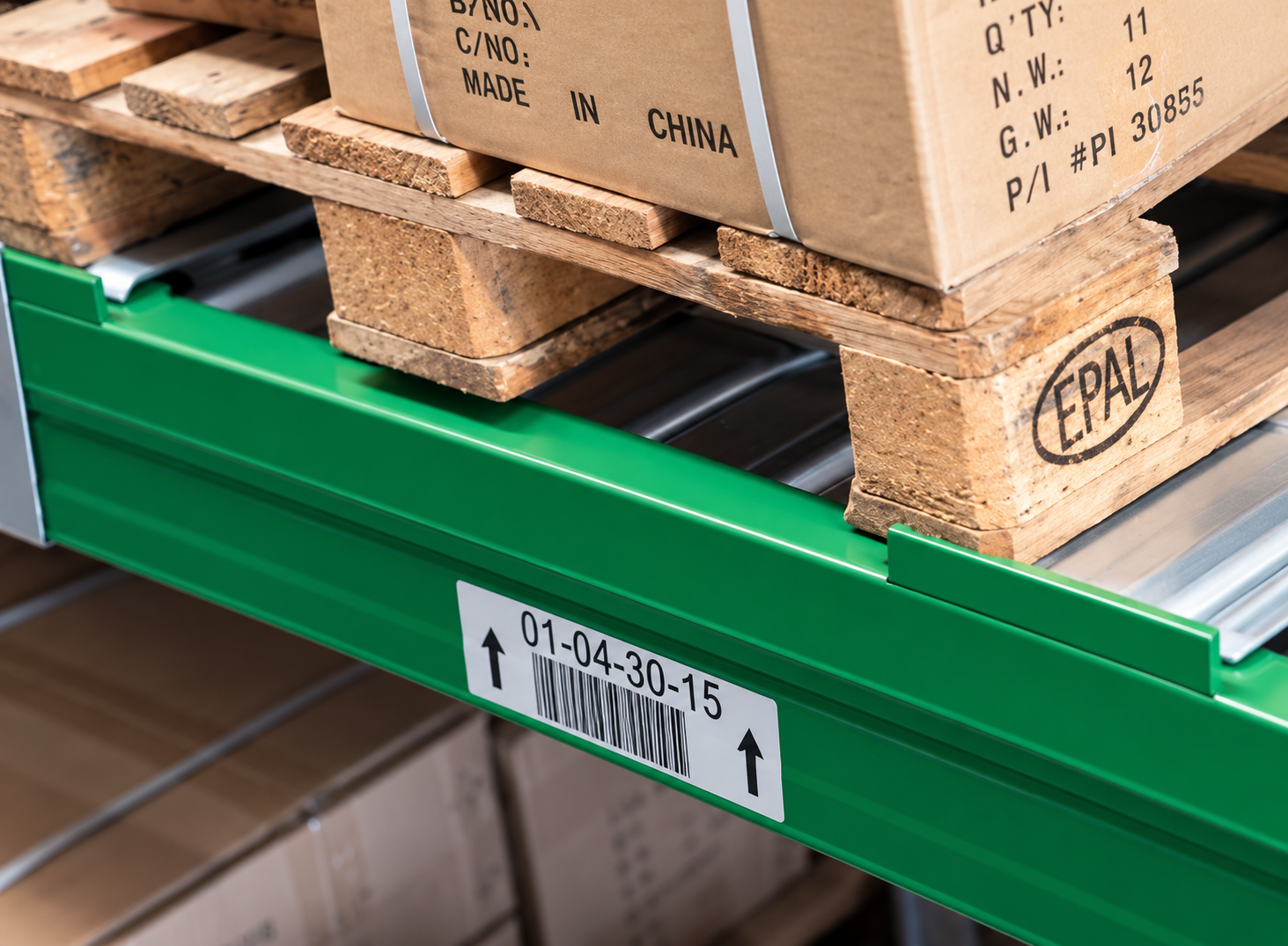
Spacer
Spacers are only required when the conveyor rollers are inserted rather than bolted in place. They are used to secure the Type 750 profiles and maintain the correct spacing between them.
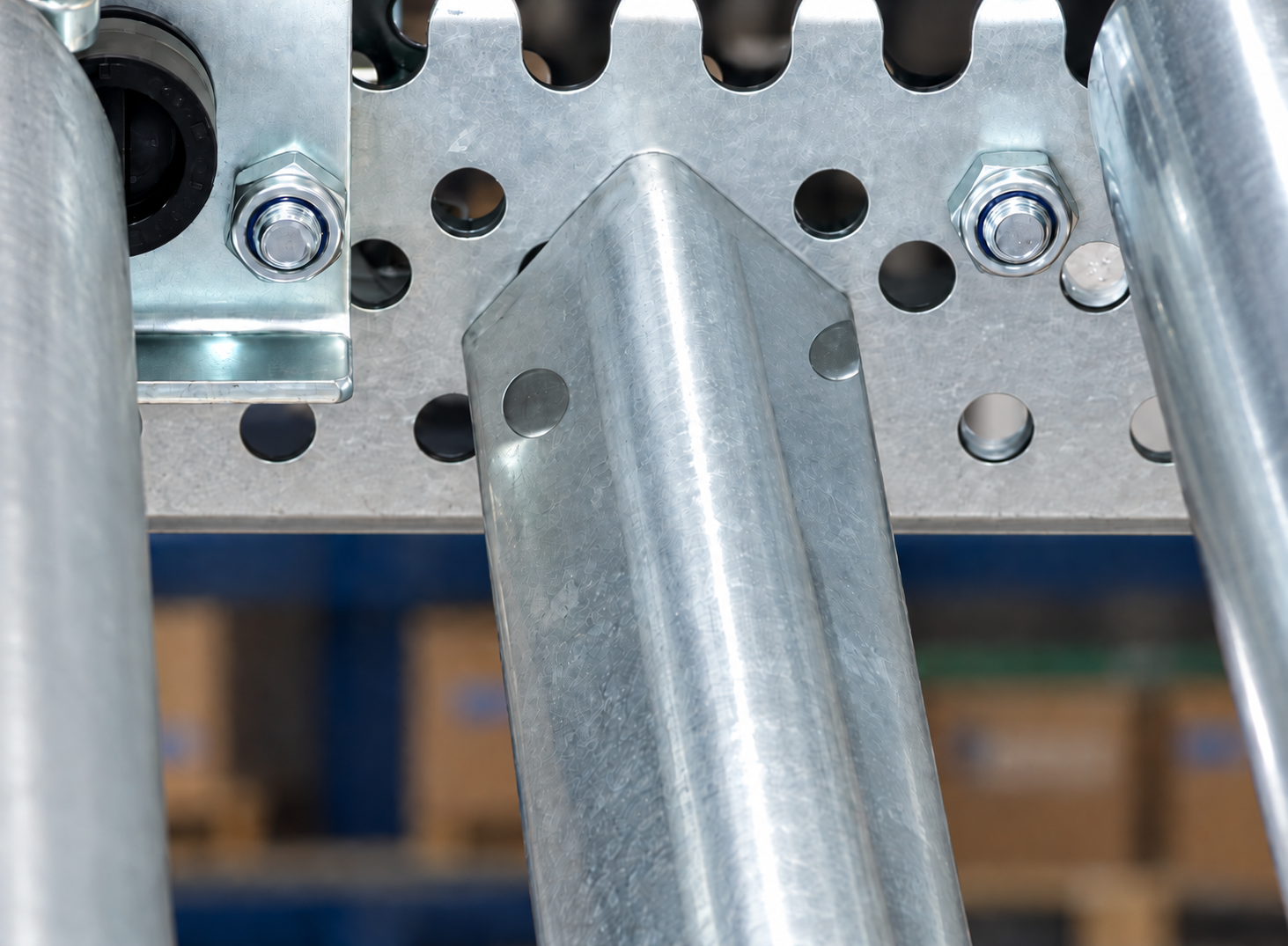
Separating device
Separators reduce the back pressure exerted by the two pallets at the front, thereby ensuring the front pallet is removed in a controlled manner. In the case of long conveyor channels, an additional pallet separator is installed for pallets weighing 1,000 kg to reduce the build-up of forces.
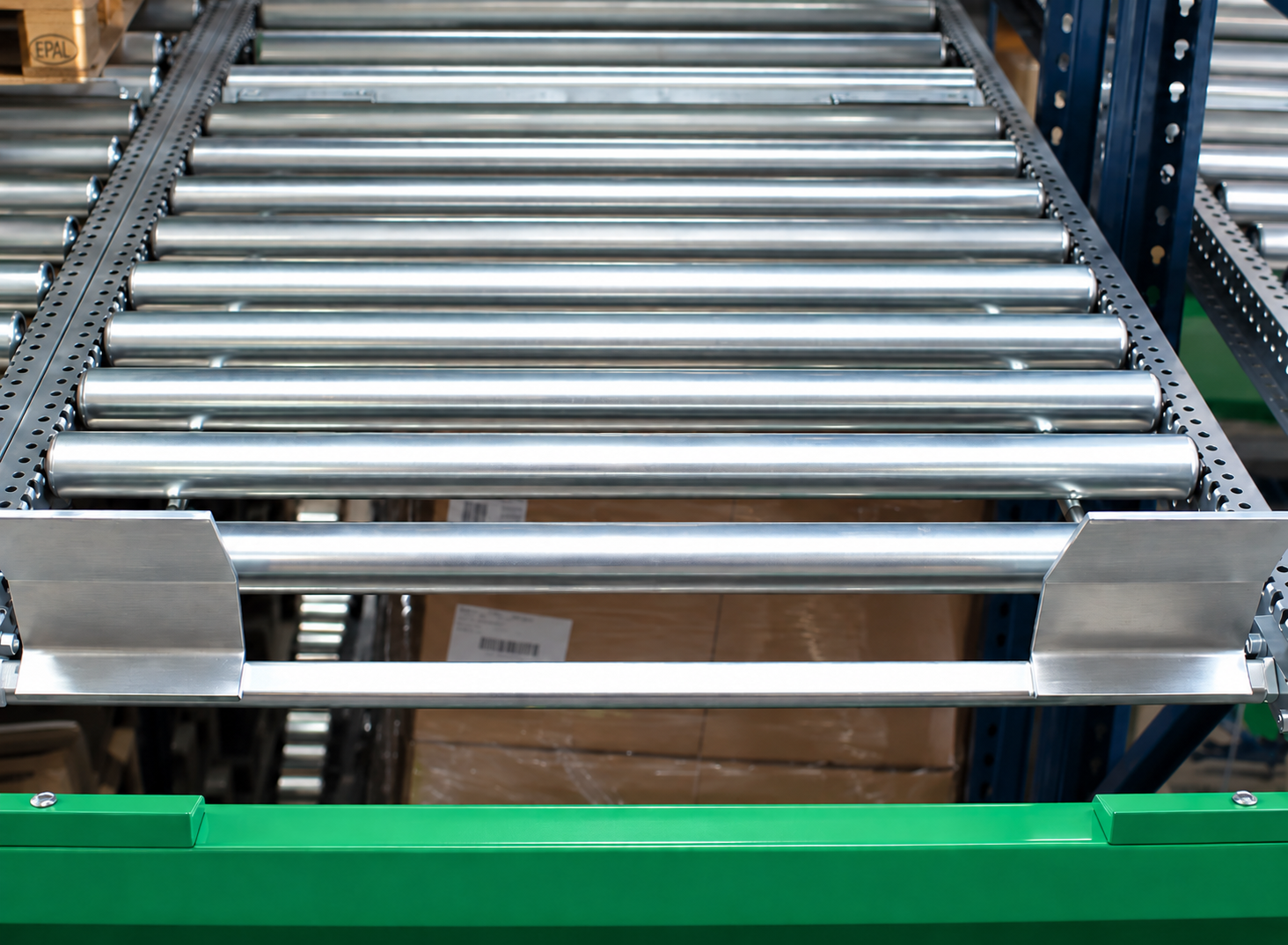
Brake rollers (direct/indirect)
The correct combination of load weight, support or rolling surface, material used, gradient and braking is crucial for a gravity roller conveyor to function properly. Rollex offers direct- and indirect-acting braking elements to ensure optimum, continuous braking. At least one brake roller is required per pallet space.
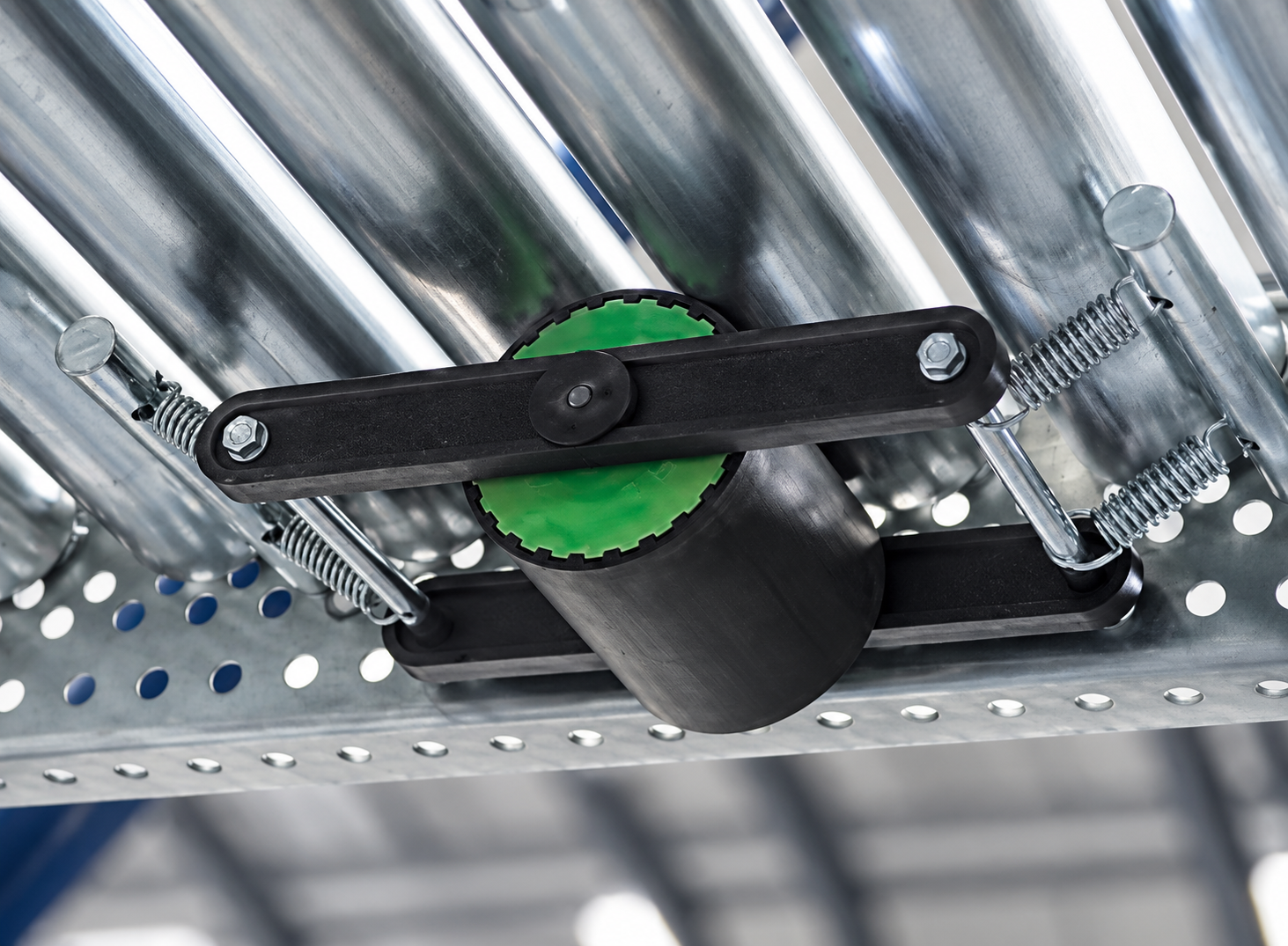
Accessories
Depending on the specific application, different accessories may be appropriate. For example, a roller conveyor operated by forklift trucks requires different protection to one operated by an automated conveyor system.
Infeed alignment
Depending on the load, handling equipment and conveyor length, the infeed area can be equipped with a centring unit. The EFZ infeed centring system ensures that the goods are placed centrally and correctly aligned on the conveyor.
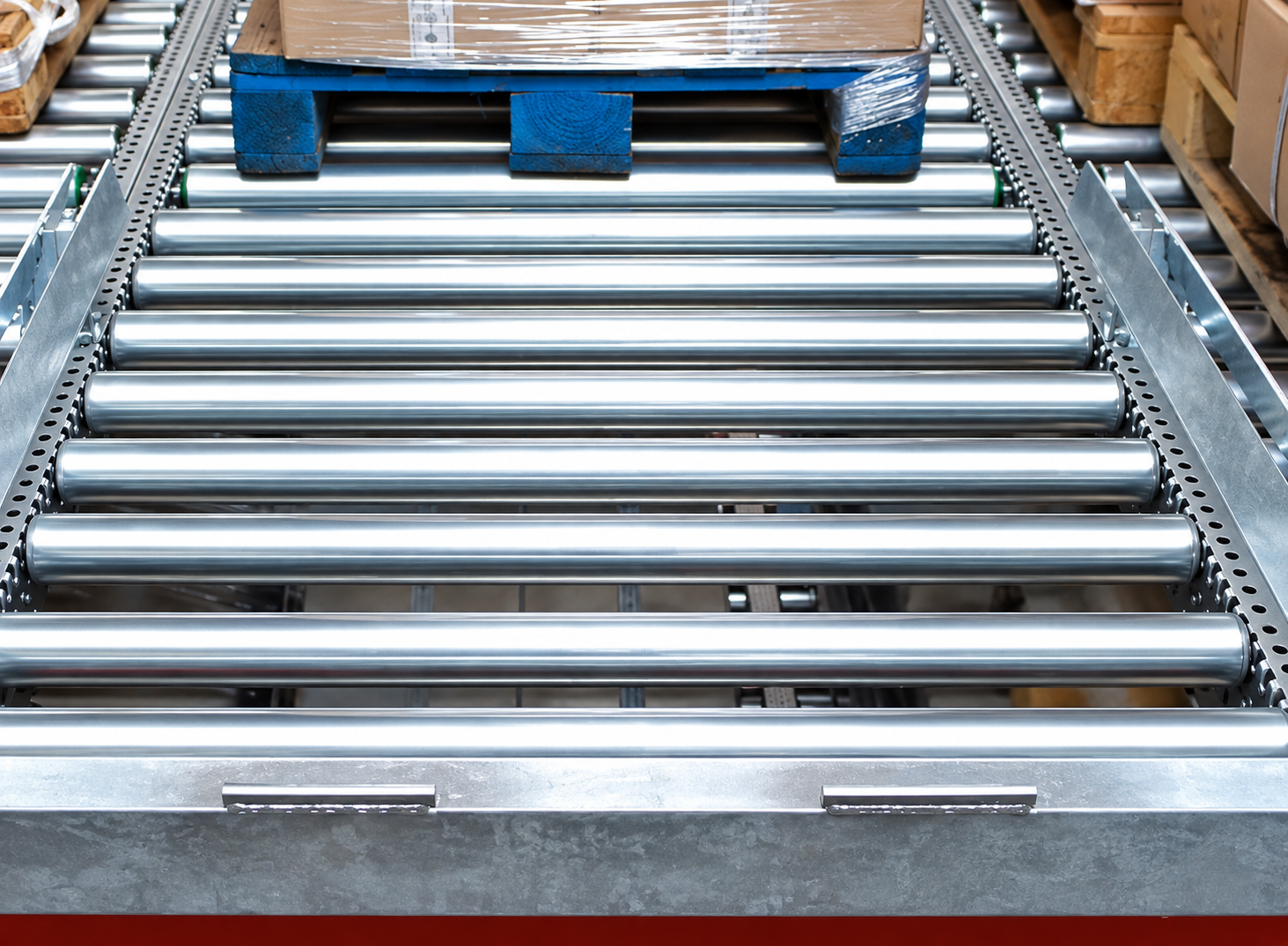
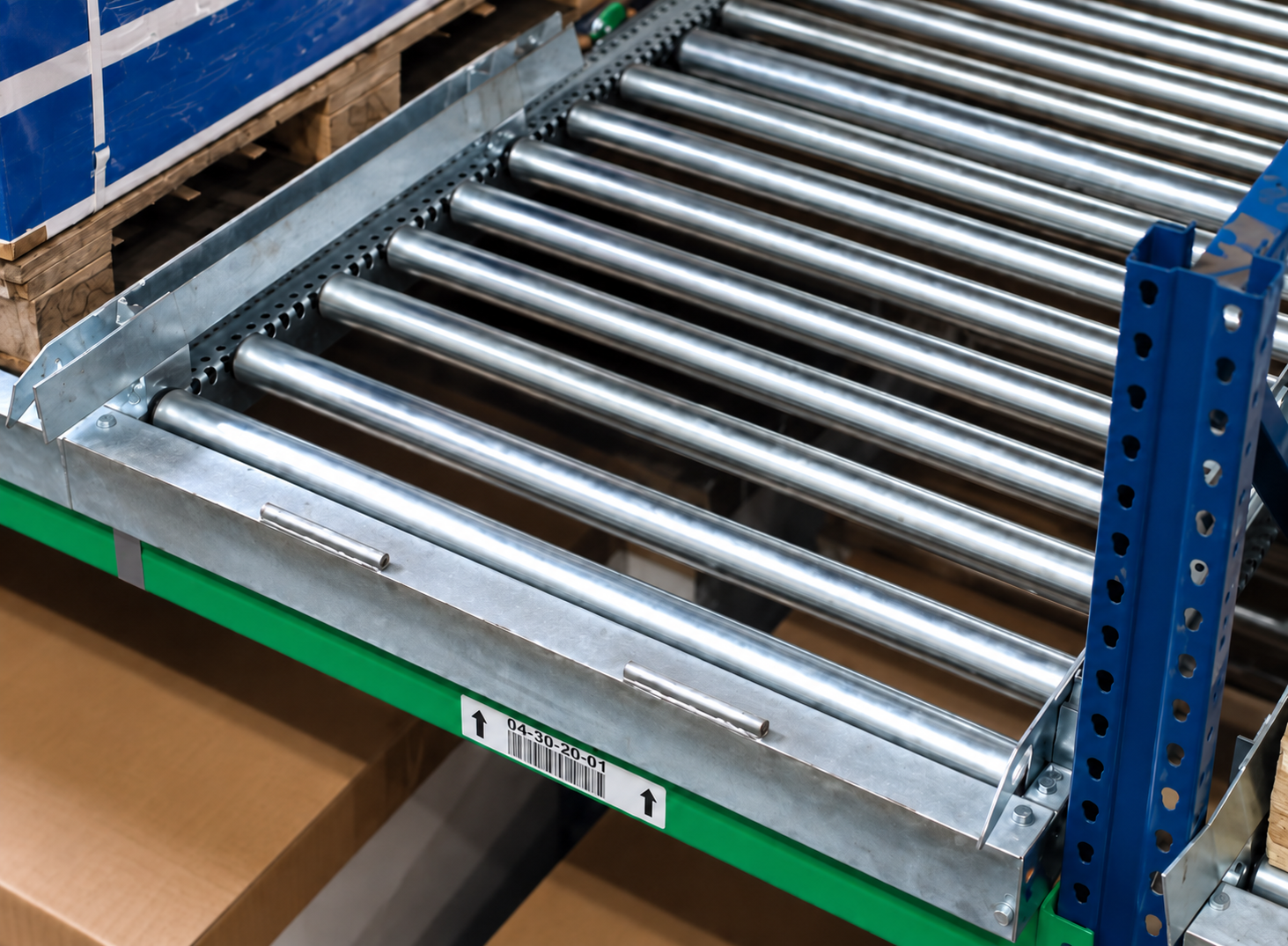
Roller protection profile
The roller protection profile is designed to protect the rollers from impacts – for example, from forklift forks – in harsh everyday operating conditions. This robust component protects the rollers in the pallet feeding area.
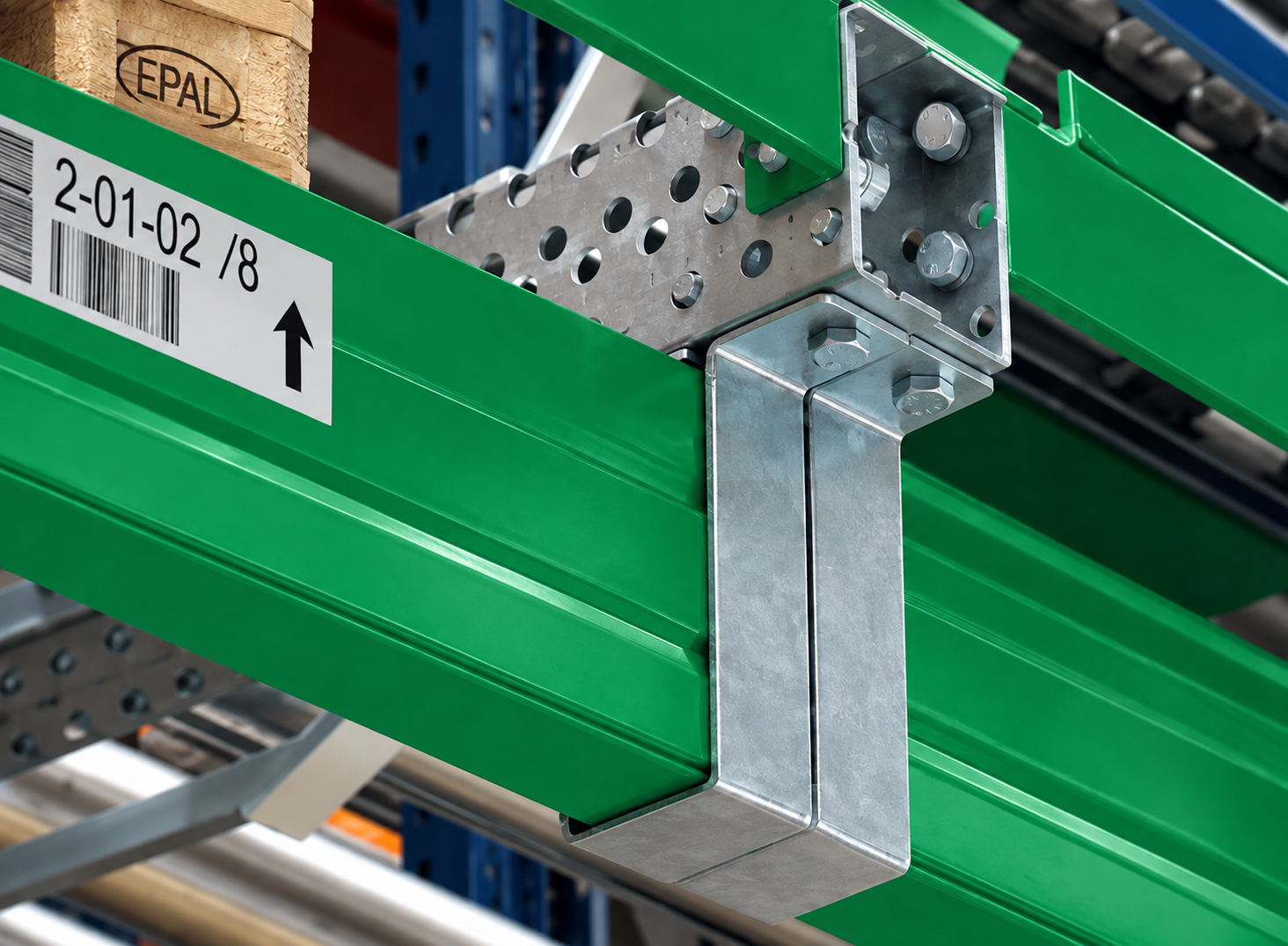
Mounting brackets
To enable the roller conveyors to be bolted onto the various beam profiles used by racking manufacturers, we supply a range of mounting brackets, for example for beams or double-T sections.
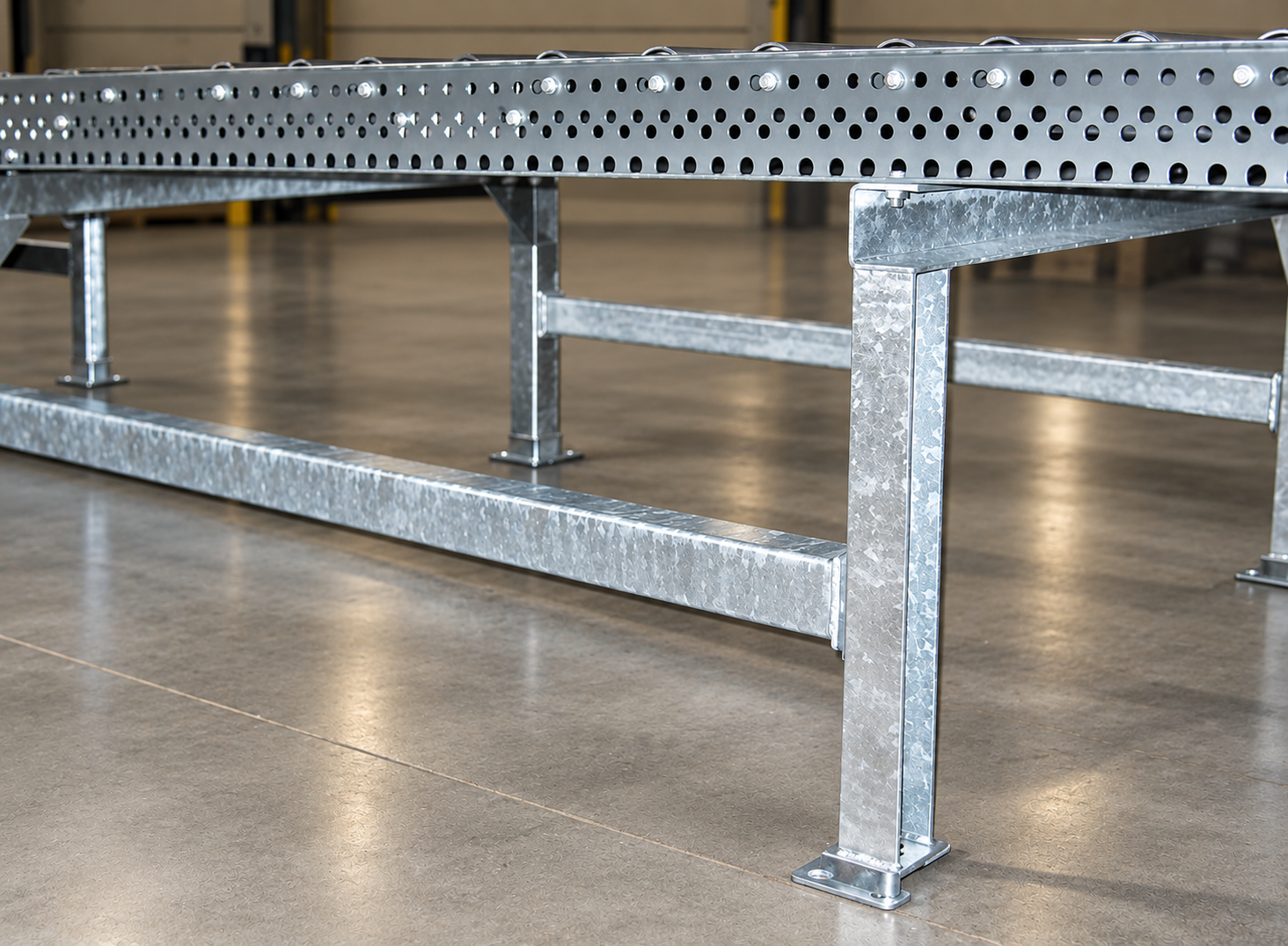
Floor support
Roller conveyors are often used on the floor without shelving. For such applications, Rollex offers sturdy, welded support structures with adjustable feet to compensate for unevenness in the floor, approx. +/-20 mm.
Impact protection
Depending on the handling equipment used, an end stop that also acts as a collision guard – for example, when using a forklift truck – can be used instead of a simple pallet end stop.
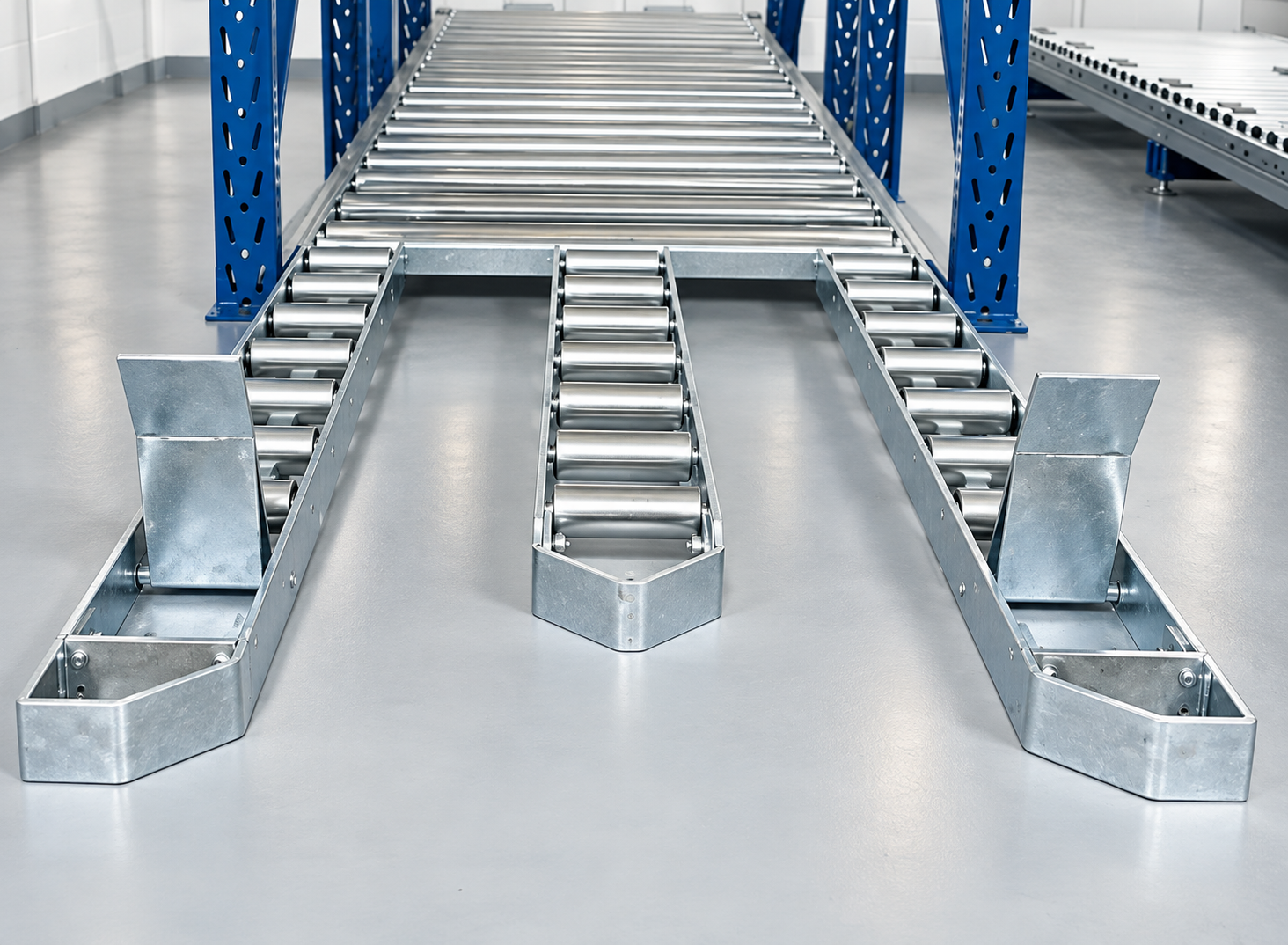
Access ramp
Depending on the control unit, it is advisable to use access ramps to reduce the lifting distance.